
Is Laser Hair Removal a Right Choice for You?
Many Laser hair removal aesthetic clinics focus on selling packages rather than explaining the biological process, timeline, and realistic outcomes of this treatment. In fact, understanding the complete laser hair removal journey is essential for setting proper expectations and achieving satisfaction with your results.
From the actual sensation during treatment to the hair growth cycles that determine your outcome, this guide reveals the crucial details that are often glossed over during consultations.
We’ll go over what actually occurs before, during, and after laser hair removal treatments—information that helps you make educated decisions about your aesthetic care—whether you’re thinking about having your first session or are attempting to understand your existing results.
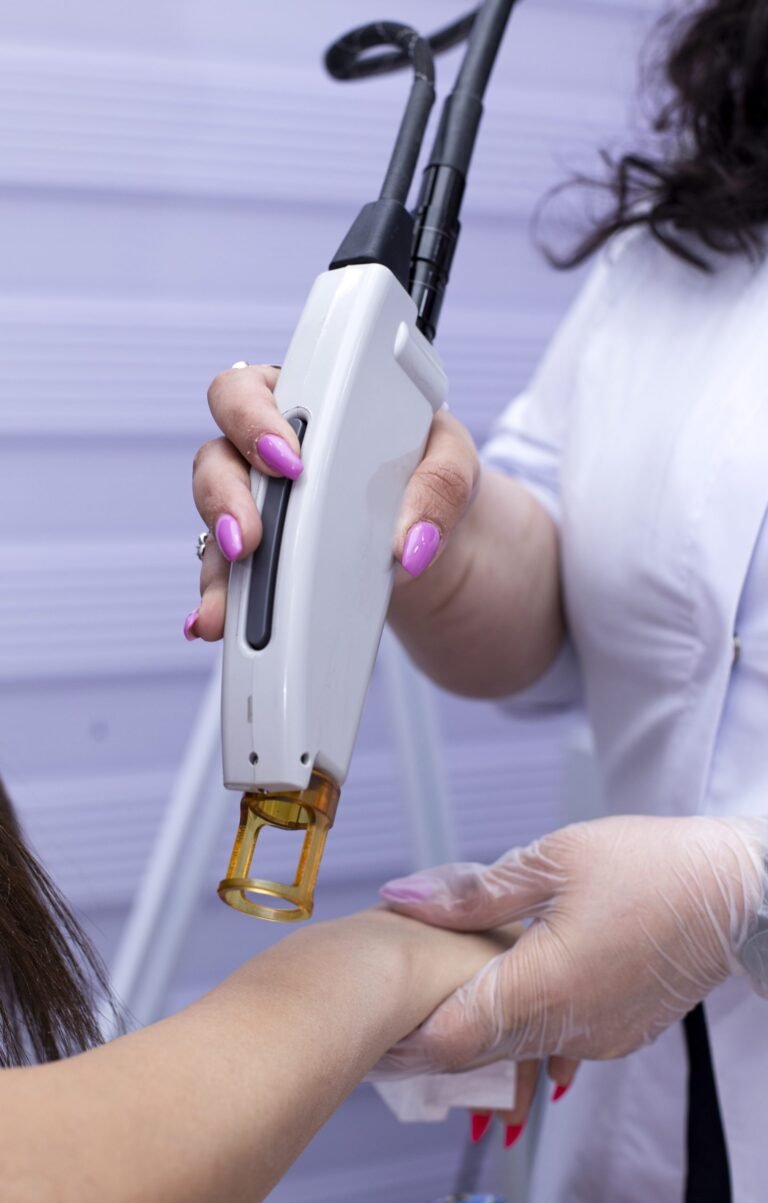
What does laser hair removal really feel like ?
Many clinics describe laser hair removal as feeling like a “rubber band snap” against your skin, though patients often report a wider range of sensations. Understanding what to actually expect can help you prepare mentally for your treatment and decide if it’s right for you.
The sensation during treatment
- When the laser targets your hair follicles, you’ll typically feel a combination of warmth, tingling, and a snapping sensation against your skin.
- Most clients rate the discomfort between 2-4 on a 10-point pain scale, placing it in the “mild annoyance” category.
- The sensation isn’t just on the surface—you might feel it radiating deeper as the laser targets the hair follicle beneath your skin.
- Modern laser devices typically incorporate cooling mechanisms that help minimize discomfort.
Pain levels by body area
Pain intensity varies dramatically depending on which part of your body is being treated:
How it compares to waxing or shaving
Compared to other hair removal methods, laser treatments offer a different pain profile. While waxing causes sharp, intense pain from physically pulling hairs from the root, the laser targets the follicle without damaging surrounding tissues . Laser’s side effects typically resolve within 1-3 days .
On a relative scale, most clients rate the discomfort levels as:

The truth - Results after your first session
One of the most confusing aspects of laser hair removal comes after you leave the clinic. First-time patients often expect immediate smoothness, only to discover their treated hair seemingly remains intact. Understanding the true timeline and process helps manage expectations for your hair removal journey.
Why hair doesn't fall out immediately
After treatment, the laser-damaged follicles remain physically present in your skin. This happens because while the follicle is damaged, the visible hair shaft above the skin remains until your body naturally expels it. During this waiting period, old hairs continue their normal growth and shedding cycle.
What shedding actually looks like
Shedding typically begins 7-14 days after your treatment and can continue for up to three weeks. Instead of hair simply disappearing, your body gradually pushes out the treated follicles in a process aestheticians call “hair ejection.”
When shedding starts, you might notice:
- Hair that looks like stubble or blackheads emerging from the skin
- Some areas becoming patchy while others still have visible hair
- Occasional clumps of hair falling out in the shower or when toweling off
Instead, gentle exfoliation 1-3 times weekly (depending on skin sensitivity) can help speed up the shedding process .
How long until you see visible changes
After your first laser hair removal session, you’ll typically see a 10-25% reduction in hair growth . The initial treatment often produces the most noticeable effects as it “shocks” the follicles with laser energy.
The timeline for visible results follows this general pattern:
- Days 1-5: Redness subsides, but hair remains visible
- Days 5-19: Destroyed follicles give way and shedding begins; expect thinning and patchy areas
- Weeks 3-4: Some areas may appear completely hair-free while others still have growth.
By your second treatment (typically 4-6 weeks after the first), you’ll notice more significant improvements. Hair grows more slowly, and any new growth appears finer with lighter coloration . Following three complete sessions, hair growth typically drops by up to 50% .
Consequently, multiple sessions spaced 6-8 weeks apart are necessary to target all hairs as they enter the treatment-responsive growth phase .
What to Expect After the Final Session
- Laser hair removal offers long-term results, but not always permanent. Most patients enjoy 70–90% hair reduction for months or even years. Under maintenance some individuals need touch-up every 6–12 months whereas few notice no regrowth for years.
- When hair starts regrowing you might notice hair in a more finer, lighter, and sparser manner. In some cases of paradoxical regrowth you may require additional sessions. Regular follow-ups will help in maintaining smooth and lasting results.
What no one tells you - The Hair Growth Cycle
The success of laser hair removal hinges on a biological process many practitioners fail to fully explain: your hair growth cycle. This critical factor determines treatment effectiveness and explains why achieving smooth, hair-free skin requires patience.
Understanding the anagen phase
The anagen phase—or active growth stage—is the only time laser hair removal actually works. During anagen, the hair appears visibly above the skin and contains its darkest pigment, making it most receptive to laser treatment. Importantly, this is when the follicle is rich in protein and melanin that absorb the laser’s energy.
Anagen typically lasts at least 2-3 weeks per hair, although duration varies based on genetics, age, and general health. At any given time, approximately 85% of your body’s hair follicles are in this active growth phase—meaning the remaining 15% won’t respond to treatment.
Why multiple sessions are necessary
Given that only a portion of hair is in the treatment-responsive anagen phase during any single session, multiple appointments are essential. After your first treatment, most people experience just a 10-25% reduction in hair growth.
The technical explanation is straightforward: each follicle cycles independently through three phases:
- Anagen: Active growth (treatment-responsive)
- Catagen: Transitional phase where hair detaches from the root
- Telogen: Resting phase when follicles are dormant
Laser treatment is completely ineffective during telogen, as the hair is detached from the root and lacks the connection needed to transmit heat to the follicle. For this reason, most people require 6-8 sessions to achieve optimal results, with each session catching more follicles as they enter the anagen phase.
How timing affects results
The scheduling of treatments directly impacts your results. Spacing sessions 4-6 weeks apart ensures you target the maximum number of hair follicles as they cycle through the growth phases. Different body areas have varying cycle lengths, requiring specific timing:
The face and neck typically need treatment every 4 weeks, underarms and bikini areas every 6 weeks, while legs, arms and trunk areas require 8-week intervals. Following this schedule optimizes results by targeting all hair follicles when they’re most receptive.
Occasionally missing an appointment won’t catastrophically affect your overall results —although extending breaks significantly can allow some follicles to regenerate, potentially requiring additional treatments.
Side Effects More Common Than You Think
While laser hair removal is often marketed for its benefits, several side effects are more common than clinics admit. Temporary redness, swelling, and mild discomfort—similar to sunburn—typically occur post-treatment but usually fade within 24–72 hours.
Pigmentation Changes
Skin discoloration causes either darkening (hyperpigmentation) or lightening (hypopigmentation) of the skin. This especially takes place in darker skin tones. Around 10% of patients might notice pigment shifts whereas 1–2% faces longer-lasting hypopigmentation.
Paradoxical Hair Growth
In some cases (0.6%–10%), laser treatment may result in paradoxical hypertrichosis which results in darker and thicker hair in treated or nearby areas. This often occurs with some laser treatments, especially for the people having hormonal imbalances like PCOS, or in sensitive areas like the face and the neck.
Conclusion
Beyond the marketing: What to truly expect from laser hair removal
Laser hair removal gives impressive long-term results, but the journey is quite different from which clinics you choose and what they promise. Pain levels may vary by treatment areas, and hair doesn’t disappear immediately—it takes over 1–3 weeks. As lasers target follicles in the active growth process some people need 6–8 sessions for 70–90% reduction that will last for years.
Side effects like redness and swelling are mostly common, whereas very few cases may involve pigmentation changes or paradoxical hair growth over the skin . Maintenance varies per person, so having clear, realistic expectations is key to feeling satisfied and making informed decisions about your esthetic care.
Book your laser hair treatment at Elite style Polyclinic at the most affordable price. Happy Hair Lasering !
Lorem ipsum dolor sit amet, consectetu.